Everyone around me who is using agents to offload some of their work is extremely happy with their ‘efficiency’ gains. I wanted to take a moment to touch on what this does, and what it does NOT do, for us.
First: the financial impact
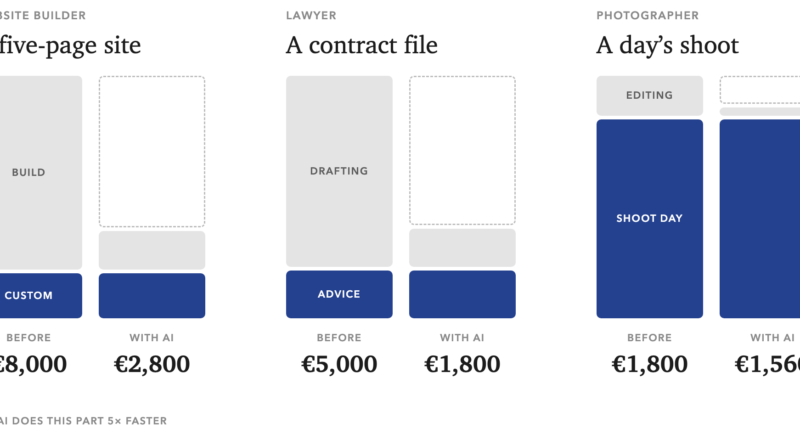
The first thing we need to accept is that just because the cost of doing something becomes cheaper*, it doesn’t automatically increase your profits. What in reality is going to happen is that the unit price for everything that can be done with AI is going to drop. Let me show you with some visuals;
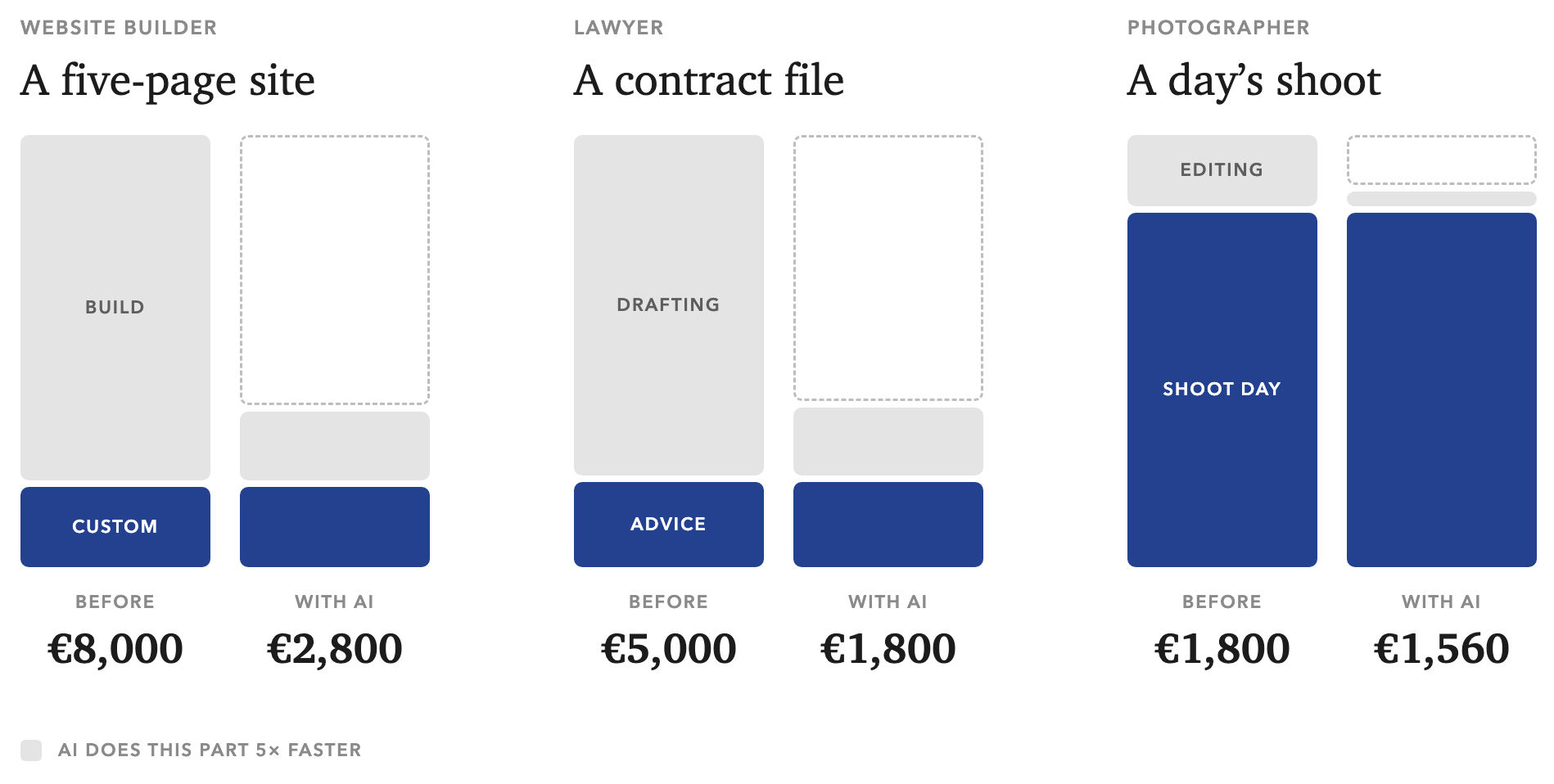
The price of a product is the (cost of goods + the labour) * a margin. The work that gets offloaded by an AI agent is different for every type of work. You just cannot compress a day of shooting pictures for a photographer, but you very much can compress the coding of a website and the drafting of legal contracts. The cost of goods may slightly increase by using some AI tooling, but the labour cost is dropping drastically. But you won’t be able to charge the same price for the same outcome anymore. If you do, your competition is going to do it cheaper and eat your lunch.
The economic outcome is that for the same revenue, you’d have to do more work. There are two things that will happen here: the existing pie will be redistributed, so some markets will see a slaughtering, but the second thing is that some offerings that were historically too expensive to make may now become economically interesting enough for clients to pay for.
*: make sure the cost of doing things with AI is still cheaper than doing it by hand. We have already heard some crazy token cost horror stories.
Second aspect: cognitive load
In the meantime, there’s another aspect of these efficiency gains that is creeping up on us: the type of impact on our brain capacity throughout the day. By increasing the ‘efficiency’ through offloading some aspects of our work to agents, we may have introduced secondary consequences.
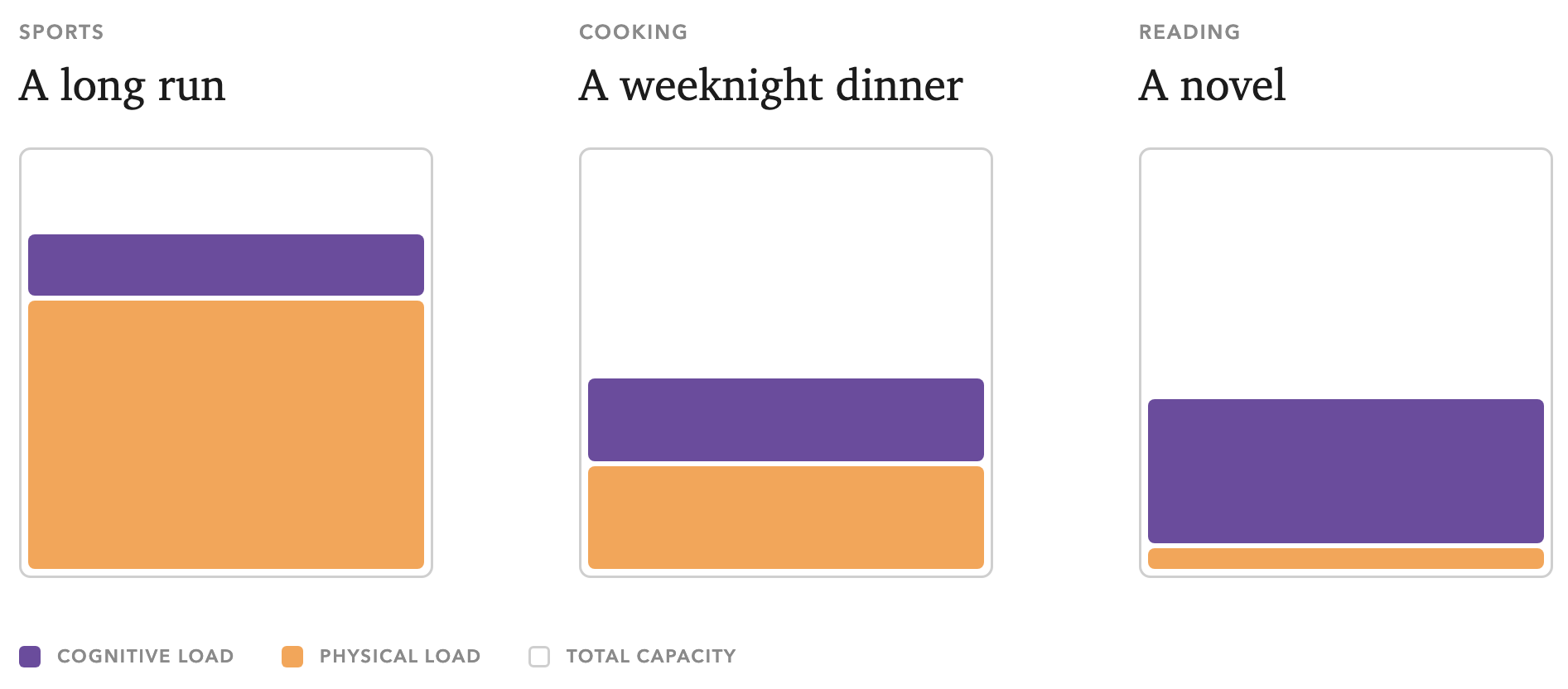
I have oversimplified how our brain allocates its total capacity by showing a difference in physical and cognitive load during specific daily activities. Cooking dinner or reading a book is not as stressful as doing a long run, but reading still requires more cognitive focus than cooking does.
Now let’s apply this to a complex project at work. Something you will hear more often now is the 20/60/20 rule; you spend 20% of your time preparing a job, 60% can be offloaded to an agent, and then you’ll do another 20% doing the analysis and decision-making process.
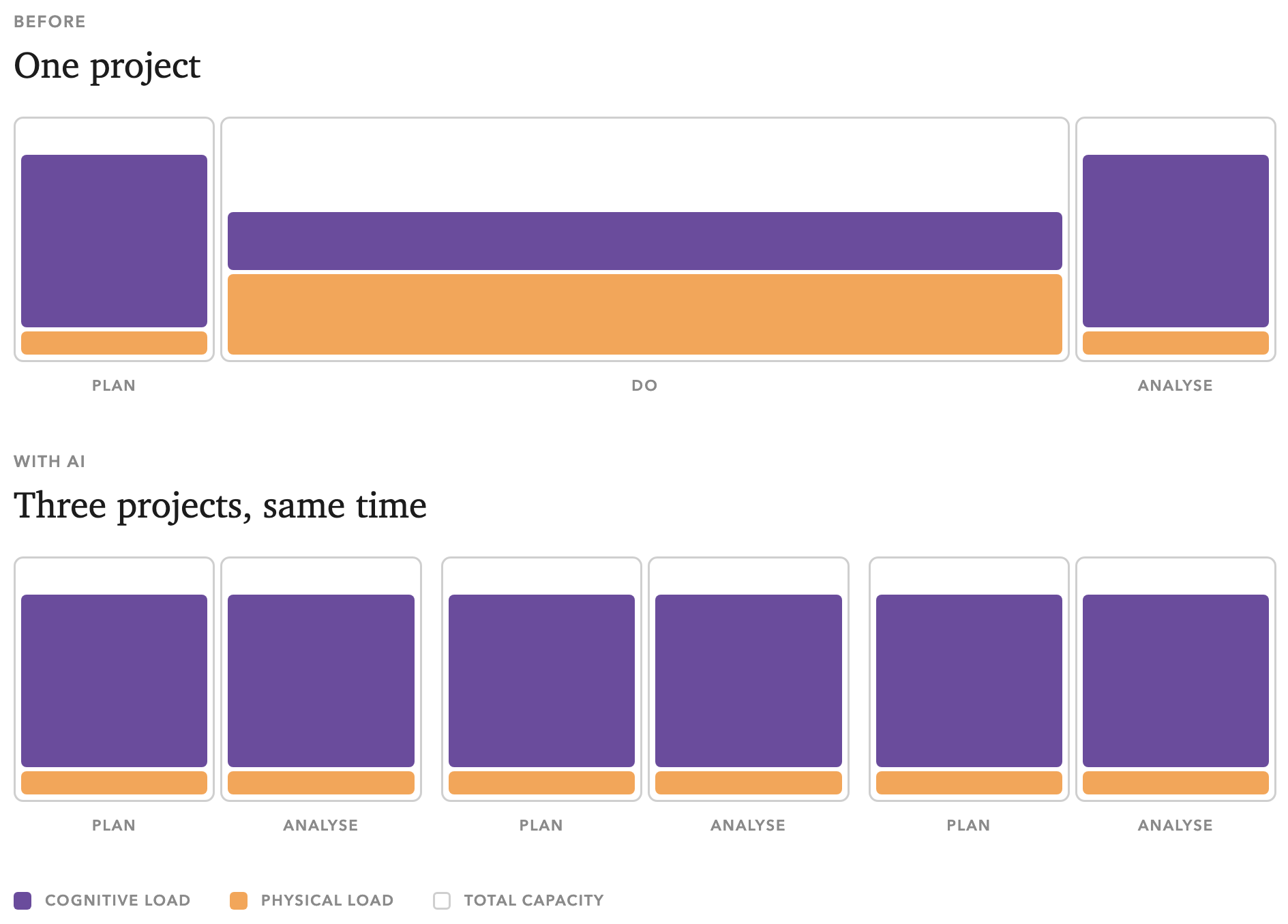
So by compressing the middle section, we can do more projects in the same time, giving us those efficiency gains we talked about in the first section. But it comes with two major setbacks:
Thinking Fast and Slow
The cognitive load we spend during the less complex work is also the time we are doing our ‘slow’ thinking. Ruminating on what we did before and what needs to come later. Eliminating the slow thinking while we are doing more executive work is going to lower the quality of our understanding of the total complexity of our work.
Fried Brain Syndrome
Did you notice the total volume of purple in the last visual? By hopping continuously from the preparation to analysis/decision phases of our work, we are putting our brain on a constant cognitive load that will lead to more extreme work stress and burnout. Historically, I could easily work till 20:00 and later in the evening; today, my brain is completely fried between 15:00 and 17:00. I manage this now by taking extra breaks (for cooking) throughout the day. But we have to be wary of this on the work floor, in our expectations of our colleagues when we talk about ‘getting more done in the same amount of time’ through these AI efficiency gains.